Ukiyo-e & Technique– category –
The craft, history, and aesthetics of ukiyo-e woodblock prints
-

The Rinpa School: Japan’s Most Decorative Tradition and Its Influence on Ukiyo-e
The Rinpa school created the visual vocabulary that Hokusai and Hiroshige inherited — bold shapes on gold ground, confident negative space, the aesthetic of essential form. The foundation of Japanese wall art. -
Lacquerware and Ukiyo-e: One Visual Language, Two Surfaces
Japanese lacquerware and ukiyo-e prints share compositional conventions, seasonal symbolism, and design vocabulary. They developed within the same visual culture — and understanding one enriches the other. -
The Floating World: What Ukiyo Actually Means
Ukiyo began as a Buddhist term for suffering and was deliberately inverted into a philosophy of pleasure. Understanding this semantic shift changes what you understand ukiyo-e to be. -
Japanese Woodblock Print Color: Pigments, Prussian Blue, and Fading
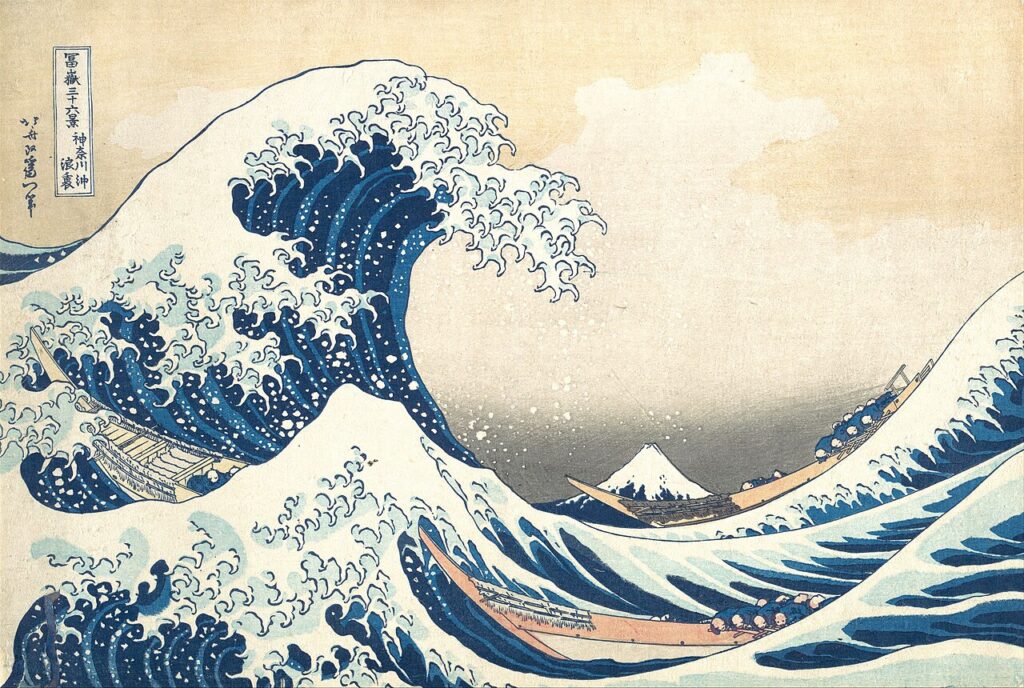
The Great Wave's iconic blue was a European synthetic pigment that arrived in Japan around 1820. A material history of ukiyo-e color — what changed, what faded, and what it means for looking at prints. -
Surimono and Japanese Fan Art: The Luxury Tier of Ukiyo-e
Surimono were privately commissioned prints with no commercial cost ceiling — metallic pigments, blind embossing, extraordinary fine carving. The luxury tier of ukiyo-e that most people have never seen. -
Japanese Landscape Painting: From Ancient Scrolls to Hokusai
Japanese landscape painting spans a thousand years — from Chinese-influenced ink scrolls through the Kanō school's gold-leaf screens to Hokusai's revolutionary ukiyo-e landscapes. A complete visual history. -
Japonisme: How Japanese Art Changed European Painting Forever
Monet, Van Gogh, Degas, Toulouse-Lautrec — all were transformed by Japanese woodblock prints. This is the story of how ukiyo-e sparked a revolution in Western art. -
Japanese Paper (Washi): The Material That Made Ukiyo-e Possible
Ukiyo-e prints were made possible by washi — Japanese handmade paper with properties that no Western paper could match. The history of the material that carried all those masterworks. -
Japanese Indigo: The Traditional Dye That Prussian Blue Replaced
Before Prussian blue arrived from Europe, Japanese textiles and prints relied on ai — traditional plant-based indigo. The history of a color that defined Japanese visual culture for centuries. -
Japanese Woodblock Print Values: How Much Are They Worth?
From a few hundred dollars to millions at auction — what determines the value of an ukiyo-e print, and what should you look for as a collector?
12